Is Council Bluffs a Good Place to Invest in Real Estate?
Most Omaha-area investors never seriously consider crossing the river. Council Bluffs gets written off based on reputation — or just habit — and that's exactly why it might be worth a closer look. Home prices are lower on the Iowa side, rents are comparable, and competition from other investors is thinner. If you're trying to build a rental portfolio in this market, the math on a Council Bluffs property can actually pencil out better than a similar deal in Omaha. Here's an honest breakdown of what you're getting into.
What This Post Covers
The real investor case for Council Bluffs — price points, rental math, property types worth targeting, and the neighborhoods that make sense (and the ones that don't).
The Basic Investor Math: Why CB Gets Interesting
The fundamental appeal is simple: lower purchase prices, similar rents. The median home in Council Bluffs is selling around $225,000 — up 13.6% year-over-year, which shows the market is moving, but prices are still well below what comparable properties cost on the Nebraska side. Meanwhile, the median rent in Council Bluffs sits around $1,100/month, which isn't dramatically different from what renters pay in lower-cost Omaha neighborhoods.
That spread — between what you pay for a property and what you can charge for it — is what creates cash flow. And in a metro where Omaha investors are fighting over the same tired inventory, Council Bluffs still has room to find deals.
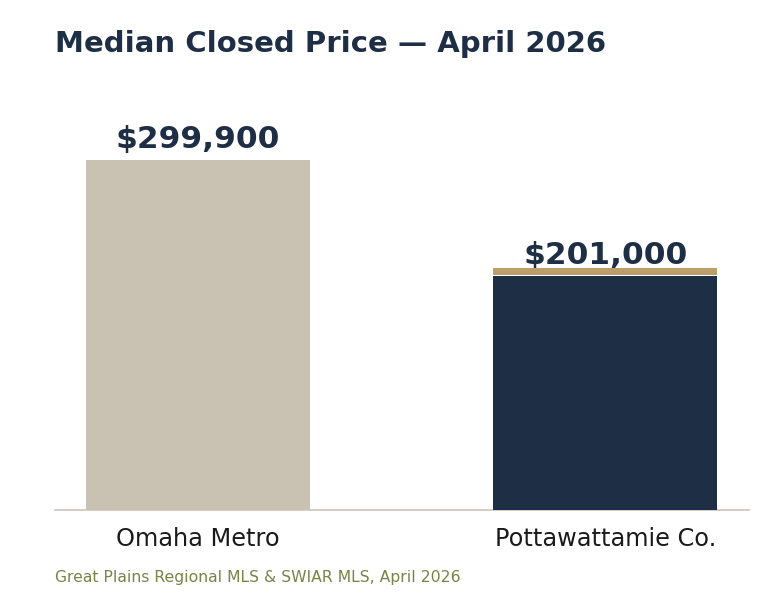
There's also a pocket of investors who go even further east — smaller Iowa towns like Glenwood, Treynor, and Missouri Valley — where you can sometimes buy a house for $80,000–$120,000 and still pull rents that make the return ratios look almost unrealistic by metro standards. It's a different risk profile, and property management gets harder the further you get from a population center, but the numbers can be compelling for the right investor.
The Stigma Problem (And Why It Works in Your Favor)
Here's something worth saying out loud: a lot of Omaha-area buyers and investors still carry a dated mental picture of Council Bluffs. The reputation is old. The city has added real development — River's Edge on the waterfront, new multi-family housing, improved corridors connecting directly to Omaha's trail system and even future streetcar access. Google operates data centers in the area. This is not the same Council Bluffs from 20 years ago.
"The stigma people on the Nebraska side have about Council Bluffs is probably your biggest advantage as an investor — less competition, more room to negotiate, better prices."
That perception gap is real, and it's working in investors' favor right now. When a market is overlooked, prices lag what the fundamentals actually support. That gap doesn't stay open forever — but right now, it's there.
Council Bluffs is also part of the same metro labor market as Omaha. Renters who work in Omaha live in Council Bluffs — for the same reason buyers do, the cost of living is lower. So your tenant pool isn't confined to whatever's happening locally in Iowa. You're drawing from a metro of nearly 1 million people.
What to Buy (And What to Watch Out For)
The west side of Council Bluffs has some of the best investor opportunities in the market right now. Post-war homes — built in the late 1940s through 1960s — that are smaller, older, and sometimes need work. The bones are often solid, and you can buy them at a price that leaves room for updates and still cash flows.
The catch: a lot of those homes have galvanized plumbing. That's the thing that will separate a manageable rental from a maintenance nightmare. If you're not prepared to repipe, or at least budget for it eventually, you'll be making service calls regularly. Going in eyes-open — either pricing that work into your offer or planning to renovate it out before you place a tenant — is the difference between a property that runs itself and one that runs you.
| Property Type | The Case For | What to Watch |
|---|---|---|
| West CB post-war homes | Lower price point, good bones, room for value-add | Galvanized plumbing, aging electrical — inspect thoroughly |
| Updated turnkey rentals | Less maintenance, easier to place tenants immediately | Higher buy-in may compress returns |
| SW Iowa small towns | Lowest purchase prices, strong rent-to-price ratios | Smaller tenant pool, property management is harder remotely |
Iowa vs. Nebraska: A Few Things Investors Should Know
Buying in Iowa means a different tax environment than Nebraska. Council Bluffs has an effective property tax rate around 1.84% — higher than the national median of 1.02%, and something to factor carefully into your return projections. That said, Iowa's landlord-tenant laws are generally considered investor-friendly. There's no statewide rent control, the eviction process is straightforward compared to many states, and security deposit rules are clear. It's not a regulatory minefield.
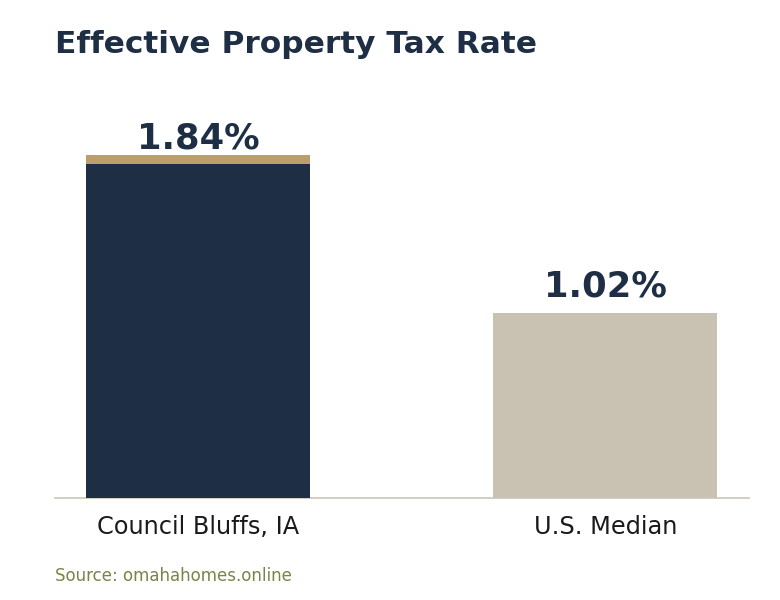
Here's the quirk worth understanding, because Iowa's property tax works nothing like Nebraska's. Iowa uses a residential “rollback” — the state only taxes a fraction of your home's assessed value. For 2025 that fraction is about 44.5%. To make up for taxing such a small slice, Iowa's levy rates look alarmingly high: in Council Bluffs, the combined city, county, and school district levies run roughly $41 per $1,000 of taxable value — about 4.1%. But that 4.1% only hits the rolled-back 44.5% of value, not your whole house. Net it out and you land right back around that 1.8% effective rate. Nebraska reaches a similar spot from the opposite direction — it taxes close to 100% of your home's value at a much lower-looking rate. The lesson for an investor: never compare the two states by their posted levy rates. Iowa's looks brutal and Nebraska's looks mild, but they end up close. Always run the effective rate — the tax actually paid divided by what the home is really worth.
How a ~4% Levy Becomes a ~1.8% Tax
$200,000 home in Council Bluffs
After the 44.5% rollback → taxable value ~$89,000
Council Bluffs levy ~$41 per $1,000 (~4.1%) → ~$3,650 / year
Effective rate: $3,650 ÷ $200,000 = ~1.8%
If you're currently investing in Nebraska, the Iowa side will have a learning curve — different county assessor, different lease requirements, different utility norms. Nothing insurmountable, but worth doing your homework before you close your first deal over there. Connecting with a local property manager who knows the Pottawattamie County market specifically can make the difference between smooth operations and constant surprises.
Free Download
Free Omaha Home Buyer's Guide
A practical roadmap through every stage of buying — from pre-approval to closing — with local Omaha tips you won't find anywhere else.
Download Free →Is Now a Good Time to Buy in Council Bluffs?
In my view, Council Bluffs is probably a better investor market than the Omaha side right now. Prices have been appreciating — 13.6% year-over-year is real movement — but they're coming from a lower base, so you're not buying at the top. Demand for rentals is steady because the city draws workers from across the metro who want housing that costs less than their Omaha alternatives. And the development happening along the river and in the downtown corridor suggests the city is investing in itself, which matters for long-term values.
The investor thesis here isn't "this market is exploding." It's more measured than that — affordable entry points, consistent rental demand, less competition, and a trajectory that's moving in the right direction. For someone building a portfolio, that's often the better setup than chasing a hot market where the margins are already thin.
If you're curious about how Council Bluffs fits into a broader Omaha-metro strategy, or want to compare it against Bellevue, Ralston, or other value-priced submarkets, I'm happy to walk through it with you. You can also browse homes under $300K across the metro to get a sense of what's available at investor-friendly price points.
Is Council Bluffs a good place to buy a rental property?
For investors focused on cash flow and affordable entry points, Council Bluffs is worth serious consideration. Home prices average around $225,000 — well below Omaha — while rents run roughly $1,100/month. The rent-to-price ratio is often better than comparable Omaha properties, and Iowa's landlord-tenant laws are generally investor-friendly.
How do Iowa property taxes affect real estate investing in Council Bluffs?
Iowa property taxes in Council Bluffs run around 1.84% effective rate, which is higher than the national median. It's a real factor in your return math — make sure you're running accurate carrying cost projections before you close. The lower purchase price can offset this, but it's not something to overlook.
What neighborhoods in Council Bluffs are best for investors?
The west side of Council Bluffs has good value-add opportunities — older post-war homes that can be updated and rented. Just go in prepared for galvanized plumbing in that era of home. Updated properties closer to the Omaha border also rent well due to easy commute access. Avoid any property with deferred maintenance you're not ready to address before placing a tenant.
Can I rent out a home in Council Bluffs if I live in Omaha?
Yes, and many investors do exactly that. The short drive across the river makes self-managing viable, though many Omaha-based landlords opt to hire a local Council Bluffs property manager — especially for older homes that may need more frequent attention.
Thinking About Investing in the Omaha Metro?
Let's talk through your criteria — price range, cash flow targets, how hands-on you want to be — and find properties that actually fit.
Recent Posts